
Care & prevention
Choosing a dental crown: matching material to the tooth
New article for medical team review before publication.
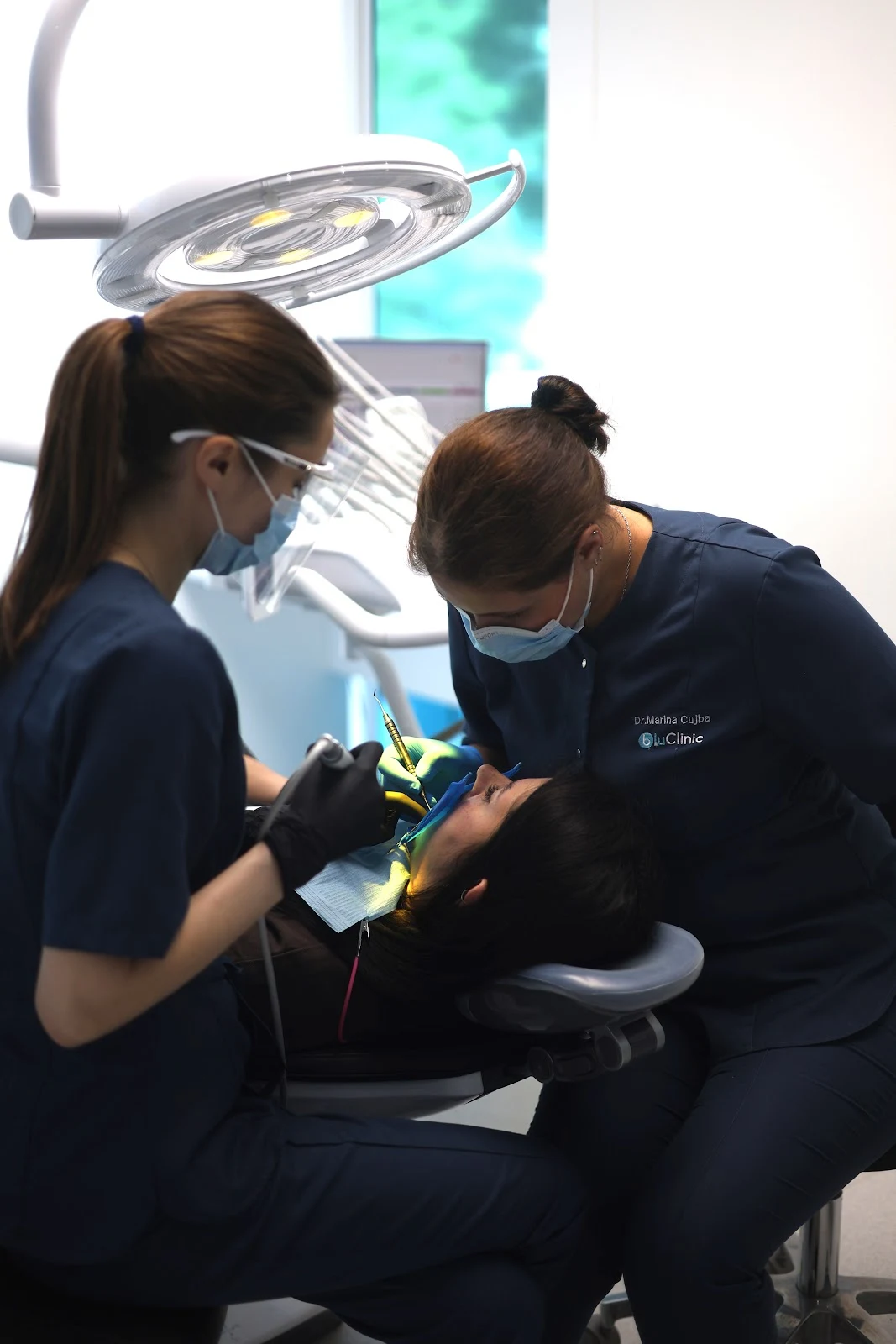
Choosing a dental crown involves more than selecting a colour or a familiar material name. The first questions are whether the tooth needs a crown, whether it can be restored predictably enough to justify treatment, and which option preserves appropriate healthy tissue.
In short
- A crown is not the only way to restore every damaged tooth.
- Remaining tooth structure, bite and gum health influence the choice.
- Metal, metal-ceramic and ceramic options have different trade-offs.
- Fit, cleaning and follow-up matter as much as the material label.
First establish whether a crown is needed
A crown covers a prepared tooth to restore its shape, function or appearance. It may be considered when substantial structure has been lost, but the decision depends on what remains and how the tooth is loaded. A filling, an inlay or an onlay that covers only part of the tooth may sometimes preserve more tissue while meeting the clinical need.
Assessment includes decay, cracks, gum support, existing restorations and the condition of the pulp or previous root canal treatment. A crown does not itself cure an infection, remove active decay or treat gum inflammation. These problems need assessment within the treatment plan before a definitive restoration is made. Root canal treatment is not automatically required for every crowned tooth.
Discuss the alternatives before preparation
Ask which parts of the tooth need protection and why a less extensive restoration would or would not be suitable. If the tooth cannot be restored satisfactorily, placing a crown will not solve that underlying limitation. The plan should explain reasonable alternatives and the consequences of postponing or declining treatment.
Match the material to the tooth and bite
For front teeth, translucency and shade matching may be particularly important. Further back, chewing forces and space for adequate material thickness often carry greater weight. The dentist also considers tooth height, remaining structure, the colour beneath the crown, gum position and contacts with opposing teeth. Clenching or grinding may affect both design and maintenance.
No single crown material is best for every situation. Material families also contain different formulations, so broad labels are only a starting point for discussion. Ask for the proposed material's name and the reason it suits this particular tooth, rather than deciding from the words “ceramic” or “metal-free” alone.
- Metal alloys may be useful where strength and available space matter, but their appearance limits use in visible areas.
- Porcelain fused to metal combines a metal framework with a tooth-coloured covering; appearance and the possibility of porcelain chipping need discussion.
- Glass ceramics can offer useful optical properties and bonding options, but suitability depends on preparation and loading.
- Zirconia ceramics vary in translucency and mechanical properties; not all zirconia crowns have identical indications.
Mention known allergies and previous reactions to dental materials. No option eliminates all risks of fracture, wear, sensitivity or future replacement.
What preparation and fitting involve
The tooth is shaped to provide space for the restoration, and an impression or digital record is taken. The amount removed depends on the tooth and restoration design; ask about this before consenting. A temporary crown may be needed between appointments. Follow the team's instructions and report if it loosens, because protection and tooth position can be affected.
At the fitting stage, the clinician checks the margins, contacts with neighbouring teeth and the bite. Appearance should also be discussed before the restoration is definitively attached. A crown should allow practical cleaning around the gumline and between teeth. Persistent food trapping or a bite that feels uneven deserves review rather than simply being accepted as part of having a crown.
Bring a short list of priorities: appearance, tissue preservation, known allergies and any grinding symptoms. Ask how the recommended option balances these priorities and what limitations remain even if treatment goes as planned.
Maintenance and symptoms worth reporting
Brush twice daily with fluoride toothpaste and clean between teeth using a suitable method. The crown itself does not decay, but the tooth at its margins can develop decay, and surrounding gums can become inflamed. Review intervals should reflect individual risks, not a universal replacement timetable. If grinding is suspected, discuss whether further assessment or a protective appliance is appropriate.
Avoid using teeth to open packaging or bite hard objects. Report movement, chipping, repeated food trapping or pain on biting. Some sensitivity can occur after preparation, but persistent, worsening or spontaneous pain needs assessment. If a crown comes off, keep it and contact the dental team; do not use household glue or try to force it back into place.
Facial swelling with fever needs urgent dental assessment. Difficulty breathing or swallowing, or rapidly spreading swelling, requires emergency medical help rather than waiting for a routine crown appointment.
Frequently asked questions
Is a metal-free crown always better?
No. Suitability depends on the tooth, bite, available space and aesthetic priorities. A marketing label does not establish which material offers the most appropriate balance for you.
How long will a crown last?
There is no guaranteed lifespan. Remaining tooth structure, fit, loading, decay risk and maintenance all matter. Reviews help identify problems, but cannot promise unlimited service.
Does a root-treated tooth always need a crown?
Not always. The location, amount of remaining structure and fracture risk guide the recommendation. Some teeth benefit from cuspal coverage, which may be provided by a crown or an appropriate partial restoration.
Related service
Choosing a dental crown: matching material to the tooth
Medical sources
This information is educational and does not replace a consultation. Treatment is planned individually.
The information on this website is educational and does not replace a consultation with a dentist. A treatment plan can only be made after an individual clinical examination.
Visit bluClinic
Contact us by phone, WhatsApp or e-mail to arrange a consultation.
Related services

Recommended reading

Bad breath: common causes and what helps
Bad breath usually starts in the mouth. Learn what can cause it and which habits help.
bluClinic editorial team · Date: 25 November 2026 · 4 min read

Teeth grinding (bruxism): signs and what helps
Many people grind or clench their teeth without knowing it. Here are common signs, what may help and when an assessment is worthwhile.
bluClinic editorial team · Date: 21 November 2026 · 4 min read
Teeth sensitive to cold and sweet: causes and what helps
Tooth sensitivity has several possible causes. Learn what can trigger it, what to try at home and when a check-up is needed.
bluClinic editorial team · Date: 17 November 2026 · 4 min read